Toronto Tech Week is one of the most exciting set of events. It is a city waking up, a week when founders, funders, builders, and dreamers pour into coffee shops, rooftops, and boardrooms across Toronto to ask a shared question: what are we building next?
For the Canada Startup Association (CSA), the answer this year was clear. While some organizations attend Toronto Tech Week, the CSA chose to build it, bringing two distinct, community-driven events to life that put the spotlight squarely on the founders who need it most. The results were two amazing events. Both told the same story: the CSA is deepening its roots in Canada’s startup ecosystem, and growing its impact on the community.
Event One: Capital & Community in Health Tech — May 27.
Canada’s health-tech sector raised approximately $1.3 billion in 2025. That sounds like progress. But for the founders trying to build the next breakthrough, the ones still pre-revenue, still pre-Series A, still convincing the world that their idea matters, that capital has been concentrating in fewer, later-stage companies. The early-stage gap is widening.
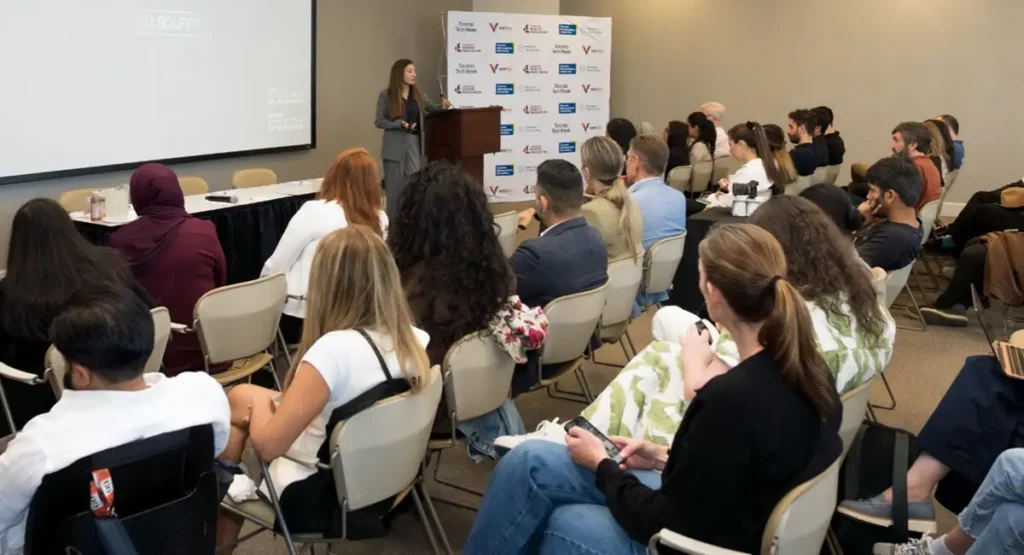
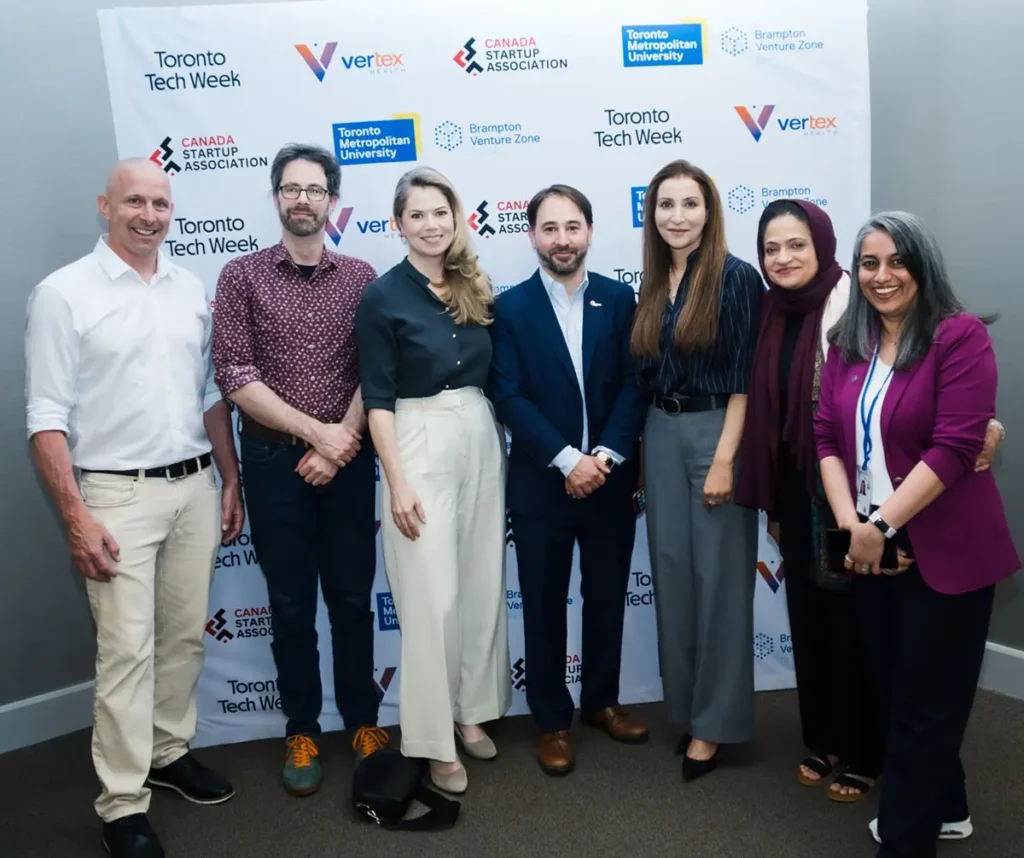
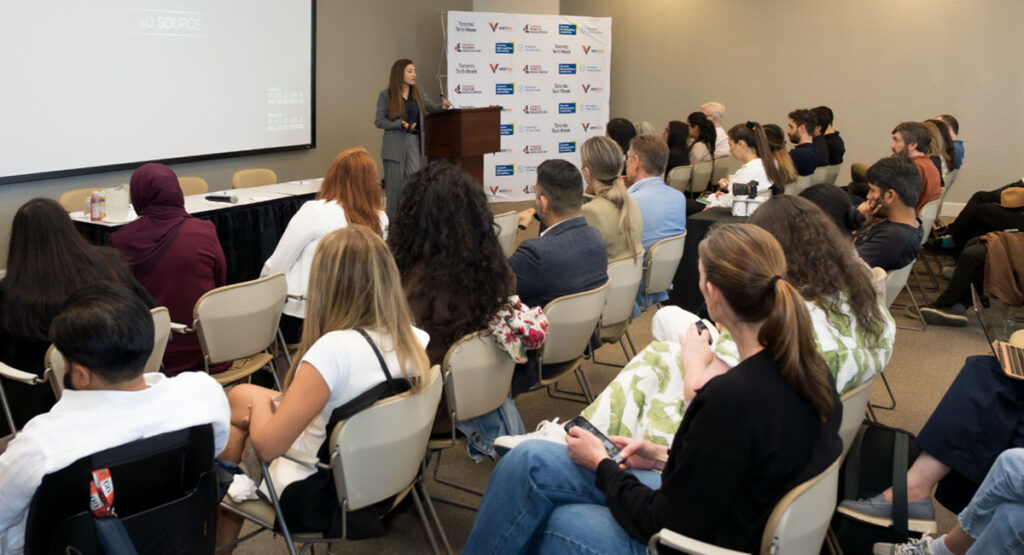
That reality was the starting point for Capital & Community in Health Tech, co-hosted by the CSA and Vertex Health and Brampton Venture Zone (BVZ) on May 27th. The event was part of the official Toronto Tech Week 2026 programming, and it gathered founders, investors, and community builders for an unfiltered conversation about what it actually takes to raise early-stage VC funding in Canadian health tech. The real substance was about people who have been through the fundraising grind were talking openly with founders who are still in it.
“We want to bring startup ecosystem players together. Collaboration is the key to success.”
That principle, which has guided the CSA’s work for years, was embodied in every conversation at the event. This wasn’t a panel where investors lectured founders from a stage. It was a mixer built for genuine exchange, where an early-stage health-tech founder might find themselves talking with a VC who specializes in exactly their domain, or connecting with a community builder who has navigated the same funding maze. The CSA has long served as a vital connector for immigrant, BIPOC, and women-led ventures, founders who often face structural barriers to the kinds of warm introductions that unlock early capital. Events like this one are how the association turns that mission into something tangible: a room, a conversation, a connection that wouldn’t have happened otherwise.
Spots were limited. They filled up. The message was heard.
Event Two: The Future of Fashion & Defense, The GITEX awareness session and the Launch of StartupGrowth Magazine — May 28
The second CSA event of the week was harder to categorize — and that was entirely the point.
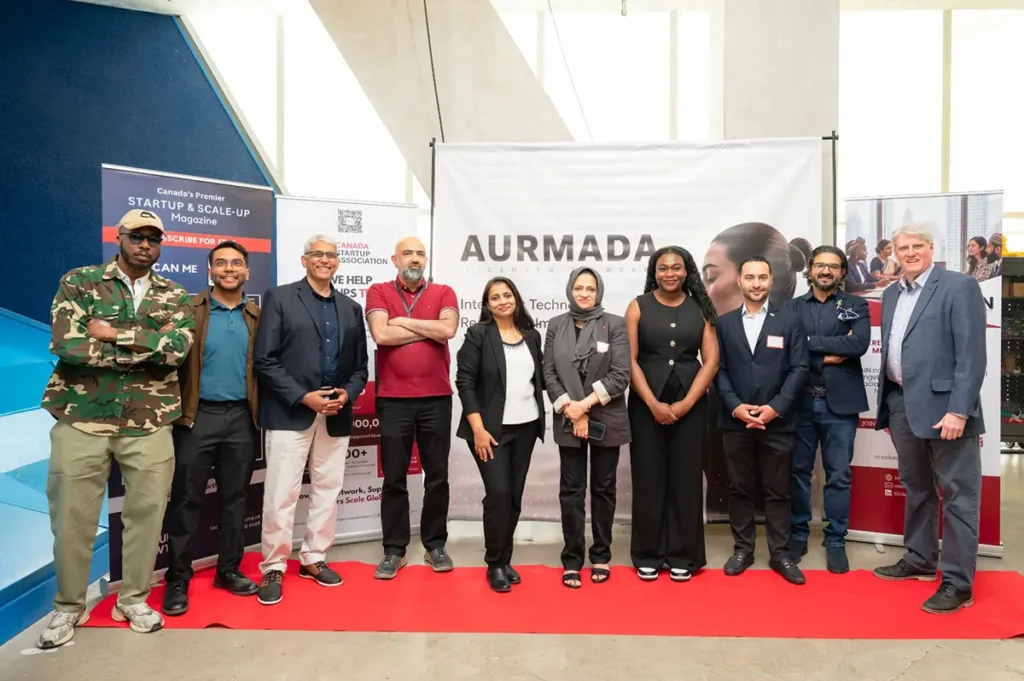
Aurmada Presents: The Future of Fashion & Defense, hosted in partnership with the CSA and Toronto Metropolitan University’s Fashion Zone. The event brought together founders, operators, investors, and ecosystem leaders working at an intersection most people don’t think to imagine: design, protection, and technology.
At the center of it all was Aurmada, a Toronto startup developing bulletproof Kevlar base layers and sensor-equipped garments for both military personnel and everyday consumers. Founder and CEO Zavosh Zaboliyan walked attendees through the unlikely history of military clothing becoming civilian fashion , the T-shirt, first issued to U.S. Navy sailors in the 1910s, eventually becoming a cultural icon, before showing off the prototypes that Aurmada hopes will repeat that journey.
“With each layer, the technologies we embed will get smarter. It’s less about ‘bulletproof’ as a function or feature, and more about an infrastructure layer for clothing to begin with. — Zavosh Zaboliyan, Aurmada”
The demo showcase was hands-on and alive. TMU student volunteers walked attendees through garments embedded with sensors that process external data, moving objects, sounds, temperature, and pressure. One prototype jacket inflated to regulate body temperature. Another was designed to be customized for end users: a mining worker needing air quality sensors, military personnel requiring full-body temperature monitoring.
The event also marked the official launch of Startup Growth Magazine, a new initiative by Canadian SME Magazine in collaboration with Canada Startup Association. The magazine is dedicated to highlighting emerging companies and innovation across the ecosystem, a fitting co-announcement for a room full of founders building the next chapter of Canadian tech.
GITEX awareness session was also the highlight of the event. Canada Startup Association is the official partner for Expand North Start by GITEXT. In the awareness session, participants were informed about the next event in Dubai in December. Presentation also covered the benefits of attending the event and the opportunities it brings for exhibitors.
The event was the mixer format the CSA has built its community programming around: a curated selection of early-stage startups building across adjacent domains, select speakers sharing perspectives on where the industry is heading, and then time, real time, for the kinds of conversations that move things forward.
The CSA’s presence at TMU was also meaningful in a broader sense. The Fashion Zone has long served as an incubator for fashion-inspired startups, giving student founders access to mentorship, industry advisors, and the space to build. By bringing this event to campus, the CSA extended its reach into the next generation of the startup community, the founders who are still in school, still forming their ambitions, still figuring out what building in Canada could look like for them.
Building the Ecosystem, Not Just Attending It
Toronto Tech Week 2026 brought more than 15,000 attendees across hundreds of events in the city. The CSA was one of many organizations that showed up, but what set it apart was the intention behind its participation.
In a year when the CSA supported over 500 startups, led delegations to eight international markets, and secured real wins for Canadian founders on the global stage, Toronto Tech Week was a reminder that the work of building an ecosystem isn’t only about going global. It’s also about showing up at home, creating the rooms where early-stage founders can find the capital, the community, and the confidence to scale.
From the 27th floor overlooking King Street to the TMU Sandbox in the heart of campus, the CSA spent two days in May doing exactly that. Health tech founders got a room where honest fundraising conversations could happen. A defense-tech inventor got a platform to show the world what clothing could become. And the Canadian startup ecosystem got a reminder of what it looks like when an association doesn’t just talk about community, it builds it.
That is the work. And at Toronto Tech Week 2026, the CSA did exactly what was needed to support the startup ecosystem!